
Landscape paintings bring scenic subjects into interiors without limiting a room to one decorative direction. Mountains, forests, rivers, beaches, gardens, countryside views, sunsets, and cityscapes can appear realistic, impressionistic, minimal, traditional, or contemporary. This variety gives homeowners many ways to connect artwork with existing furniture, colours, materials, and architectural details. However, no scenic painting suits every setting automatically. Successful selection depends on subject, composition, scale, framing, wall dimensions, surrounding décor, and personal preference.
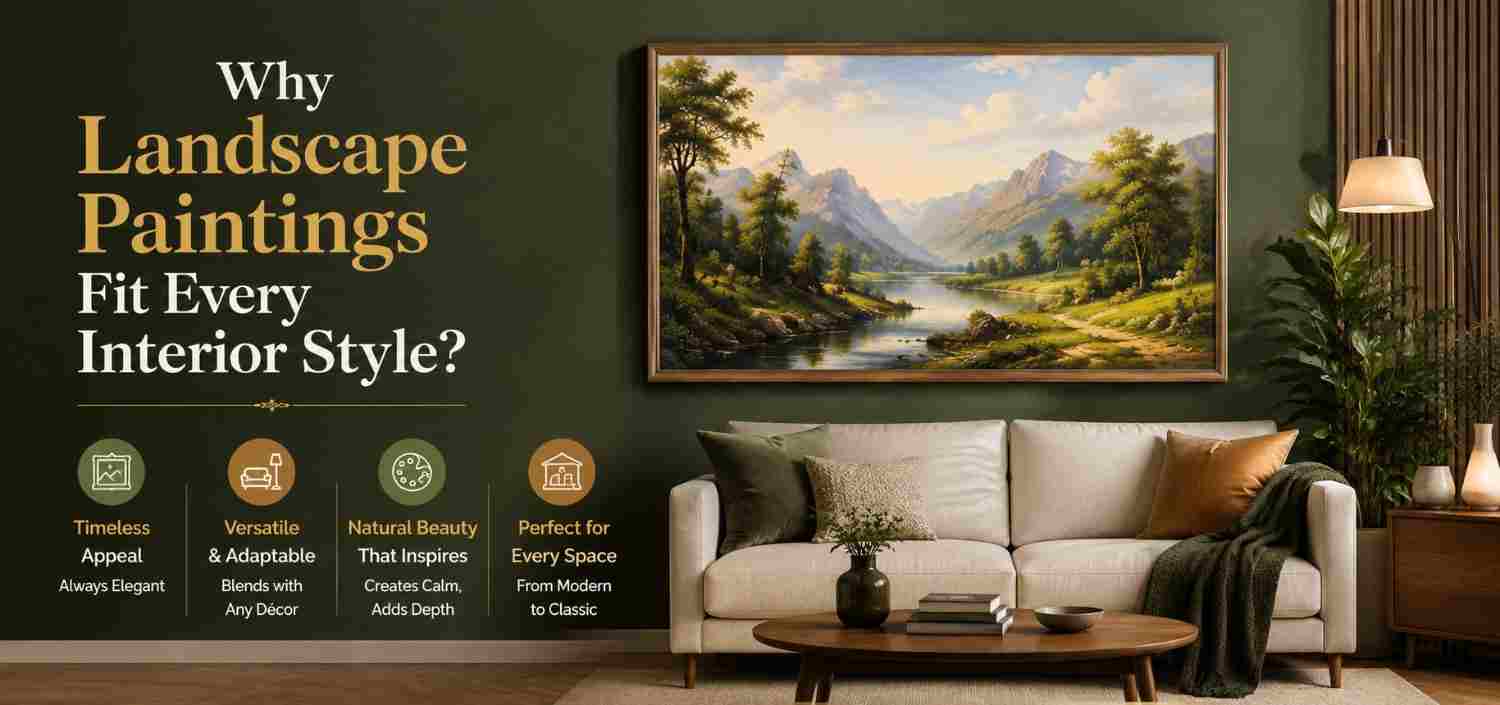
Scenic Art Adapts to Different Interior Styles
Landscape artwork is flexible because the same broad subject can be interpreted through very different colours, techniques, and compositions. A misty mountain scene may appear restrained and modern, while a richly detailed countryside painting can support a more traditional setting.
Modern and Minimalist Spaces
Modern interiors often use clean furniture lines, uncluttered walls, and controlled colour palettes. In these rooms, landscape paintings with simplified forms, limited tones, broad horizons, or subtle textures can add visual interest without making the space feel crowded.
A large scenic canvas can also become statement artwork on an otherwise plain wall. Moreover, an unframed or slim-framed presentation may complement contemporary furniture and simple architectural finishes.
Traditional and Classic Interiors
Traditional interiors can accommodate detailed nature paintings, pastoral scenes, gardens, rivers, architectural views, or landscapes with layered colour and visible craftsmanship. Ornamental or substantial frames may connect the artwork with carved furniture, decorative lighting, patterned textiles, or classic accessories.
Different Décor Approaches Need Different Landscapes
Nature-inspired décor extends beyond modern and traditional categories. Rustic, Scandinavian, bohemian, and eclectic spaces can all use scenic wall art, provided the artwork relates thoughtfully to their materials and visual character.
Rustic, Scandinavian, and Bohemian Settings
Rustic interiors often feature wood, textured surfaces, earthy materials, and handcrafted details. Forests, mountains, fields, and countryside scenes can relate naturally to these elements, particularly when their colour palettes contain muted greens, browns, ochres, or neutral tones.
Scandinavian-inspired rooms generally favour simplicity and light visual arrangements. Consequently, understated nature paintings with open compositions may fit better than highly elaborate scenes.
Bohemian interiors allow greater layering of patterns, textiles, colours, and objects. Landscape artwork can participate in that richness, although its scale and palette should prevent it from disappearing among surrounding decorative elements.
Colour and Subject Influence Interior Compatibility
The subject matters, but colour often determines how strongly a landscape interacts with a room. Blue coastal views, green forests, warm sunsets, monochromatic mountains, and colourful cityscapes create distinctly different visual relationships with furniture and textiles.
Coordinate Rather Than Copy Colours
Artwork does not need to repeat every shade already present. Instead, one or two related colours can connect a painting with cushions, rugs, curtains, upholstery, or decorative accessories. Meanwhile, contrasting colours can create a stronger focal point.
Consider the atmosphere already established by the interior. A dramatic sunset may suit a room designed around strong contrasts, whereas a pale riverside composition might work better within a restrained palette. These are styling possibilities rather than fixed rules.
Scale and Composition Matter as Much as Subject
Even an appealing landscape can look misplaced when its dimensions conflict with the wall or furniture. Therefore, buyers should measure the intended area before choosing artwork.
Large Landscapes and Smaller Compositions
Wide panoramic paintings can work effectively above sofas, sideboards, beds, or dining furniture because their horizontal proportions relate to broad surfaces. Vertical landscapes may suit narrow walls, columns between openings, or compact hallway areas.
Before choosing size, consider:
Wall width and height
Furniture dimensions below the painting
Ceiling height
Viewing distance
Nearby windows and doors
Space around other decorative pieces
Landscape Paintings Across Different Rooms
Room function affects suitable scale, placement, and visual intensity.
Living, Dining, and Bedroom Placement
A living room can accommodate a substantial mountain, forest, beach, or cityscape composition as a focal feature. Dining spaces may suit horizontal landscapes positioned in relation to a table or console. Additionally, scenic artwork can help connect dining furniture with surrounding wall décor through shared colours or materials.
Bedrooms can use landscapes above a bed, dresser, or open wall. Nevertheless, buyers should choose subjects according to personal preference rather than assuming particular scenes will create guaranteed emotional effects.
Framing Changes the Character of Scenic Artwork
Frames influence how landscape paintings relate to furniture and architectural details. Traditional framed paintings can gain definition from wood-toned, decorative, or understated borders, depending on the composition.
Shopping Online Requires Accurate Measurement
People planning to buy landscape paintings online in India should compare actual measurements, materials, orientation, framing, finish, and detailed product images against the intended wall before making a decision.
Check Practical Details Before Purchasing
Room mock-ups can provide useful visual context, but they may not represent exact scale. Therefore, stated dimensions should remain the primary reference for planning.
Check:
Exact artwork and framed dimensions
Canvas, paper, board, or other stated material
Hand-painted, printed, or mixed production method
Frame inclusion and hanging fittings
Surface finish and visible texture
Orientation and number of panels
Packaging and damage procedures
Applicable return conditions
Avoid Common Styling Mistakes
A landscape can lose impact when placed too high, squeezed between furniture, or surrounded by competing decorative objects. Similarly, selecting a small painting for a very large wall can make the composition feel visually disconnected.
Consider the Entire Wall
Measure before purchasing, allow suitable surrounding space, and consider sightlines from normal seating or entry positions. Avoid matching every accessory directly to the painting. Moreover, do not assume every blank surface needs wall décor; open space can help scenic artwork remain visually distinct.
Conclusion
Landscape paintings can work across many interior styles because scenic subjects allow variation in colour, composition, scale, technique, and presentation. Modern rooms may favour restrained canvases, while traditional, rustic, bohemian, or eclectic spaces can support richer treatments. Nevertheless, successful styling depends on the specific painting and its surroundings. Buyers should consider wall dimensions, furniture scale, colour relationships, framing, lighting, room function, and personal taste. A carefully selected landscape can complement an interior without forcing the entire space to follow one decorative theme.